
 Sitio web principal

¿Cuáles son las principales diferencias entre una retroexcavadora y una minicargadora?
¿Te has preguntado alguna vez cuál es la verdadera diferencia entre una retroexcavadora y una minicargadora equipada con un accesorio de retroexcavadora? Ambas máquinas pueden realizar tareas de carga y excavación, entonces, ¿por qué elegir una u otra?
La diferencia radica en su diseño, capacidad de excavación, maniobrabilidad y versatilidad de implementos. Esta guía compara las retroexcavadoras y las minicargadoras según sus aplicaciones y condiciones de operación típicas, proporcionando una referencia práctica para la selección de equipos.
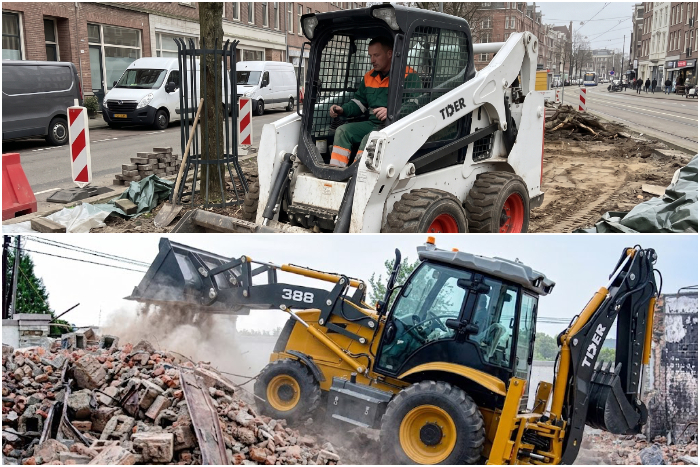
1. Respuesta rápida: ¿Cuál es la principal diferencia?
La confusión es comprensible, ya que una minicargadora también puede equiparse con una retroexcavadora para excavar. Sin embargo, ambas máquinas son fundamentalmente diferentes en diseño y configuración operativa.
A retroexcavadora Está diseñado específicamente tanto para excavación como para carga, con un brazo excavador trasero dedicado. dirección deslizante Está diseñado para ofrecer una maniobrabilidad compacta y una gran versatilidad en los accesorios, con una capacidad de excavación que depende del accesorio utilizado.
En términos sencillos:
- Excavación profunda y apertura de zanjas → Retroexcavadora
- Trabajo compacto y accesorios versátiles → Minicargadora
La elección correcta depende de la profundidad de la excavación, las condiciones del lugar de trabajo y el tipo de trabajo que realice con mayor frecuencia.
2. Retroexcavadora vs. Minicargadora: Diferencias clave
La diferencia fundamental radica en su diseño y configuración operativa. Una retroexcavadora está construida con un sistema de carga frontal y una unidad de excavación trasera específica, lo que le permite alternar entre carga y excavación sin cambiar el equipo de trabajo principal.
Una minicargadora ofrece un enfoque diferente. Su chasis compacto y su sistema de acoplamiento rápido permiten que una sola máquina realice múltiples tareas mediante el cambio de implementos. Esto la hace muy maniobrable y versátil, pero su capacidad de excavación depende en gran medida del implemento utilizado.
Factor | Retroexcavadora | Minicargadora |
Diseño central | Cargador frontal + excavadora trasera integrada | Chasis compacto + accesorios intercambiables |
Excavación | Sistema de excavación integrado | Dependiente del apego |
Maniobrabilidad | Bien | Excelente en espacios reducidos |
Flexibilidad de fijación | Bien | Excelente |
Fuerza típica | Excavación + carga | Trabajo compacto y multiusos |
3. Una comparación práctica: TDER ZT15-20 vs. TDS65
Para que esta diferencia sea más fácil de entender, consideremos dos modelos TDER: la retroexcavadora ZT15-20 y la minicargadora de ruedas TDS65.
| Especificación clave | ZT15-20 | TDS65 con accesorios | |
| Capacidad de carga | 1.000 kg | 950 kg | |
| Capacidad del cubo delantero | 0,6 m³ | 0,5 m³ | |
| Capacidad de la cuchara de excavación | 0,12 m³ | 0,06 m³ | |
| Profundidad máxima de excavación | 2.350 mm | Con brazo de retroexcavadora | 2.000 mm |
| Con brazo de retroexcavadora oscilante | 2.000 mm | ||
| Con retroexcavadora | 2.400 mm | ||
| Potencia del motor | 37 kW | 55 kW | |
| Flujo hidráulico | — | 75 / 120 L/min | |
| Longitud total | 5.200 mm | 3.580 mm con cucharón | |
| Velocidad máxima | 25 km/h | 12 km/h | |
¿Qué implican estas especificaciones para su elección?
Una capacidad de carga similar no significa que las máquinas sean intercambiables. La ZT15-20 y la TDS65 tienen capacidades de carga y tamaños de cucharón relativamente parecidos, por lo que ambas pueden realizar trabajos generales de carga y manipulación de materiales.
Sus capacidades de excavación también pueden superponerse. Con el accesorio adecuado para minicargadoras, la TDS65 puede alcanzar una profundidad de excavación de hasta 2400 mm, en comparación con los 2350 mm de la ZT15-20.
La principal diferencia radica en cómo se implementan estas capacidades. La ZT15-20 integra un sistema de excavación trasera específico, lo que convierte la excavación en una función esencial de la máquina. La TDS65 utiliza una plataforma compacta de dirección deslizante y accesorios intercambiables para adaptarse a diferentes tareas.
Por lo tanto, la mejor opción depende menos de una sola especificación y más de los requisitos reales de su trabajo, como la profundidad de la excavación, el espacio de trabajo disponible, la frecuencia de los cambios de accesorios y el tipo de trabajo que realiza con mayor frecuencia.
4. ¿Qué máquina es mejor para tu proyecto? Cómo elegir
La elección correcta depende de para qué necesites que la máquina haga con mayor frecuencia, en lugar de simplemente comparar las especificaciones.
Elija una retroexcavadora si:
- La excavación es una tarea fundamental. — Regularmente necesitas cavar zanjas, cimientos, líneas de servicios públicos u otras excavaciones más profundas.
- Necesitas tanto excavar como cargar. — Una excavadora trasera y una cargadora frontal específicas permiten que una sola máquina realice ambas operaciones sin cambiar la configuración de trabajo principal.
- Quieres un rendimiento de excavación constante — El sistema de retroexcavadora está integrado en la máquina y listo para trabajos de excavación regulares.
- Sus proyectos implican la apertura de obras. — La construcción de carreteras, los servicios públicos, las infraestructuras y la construcción en general son aplicaciones típicas.
Elija una minicargadora si:
- El espacio de trabajo es limitado. — Su diseño compacto y su maniobrabilidad resultan muy valiosos en lugares de trabajo con espacio reducido.
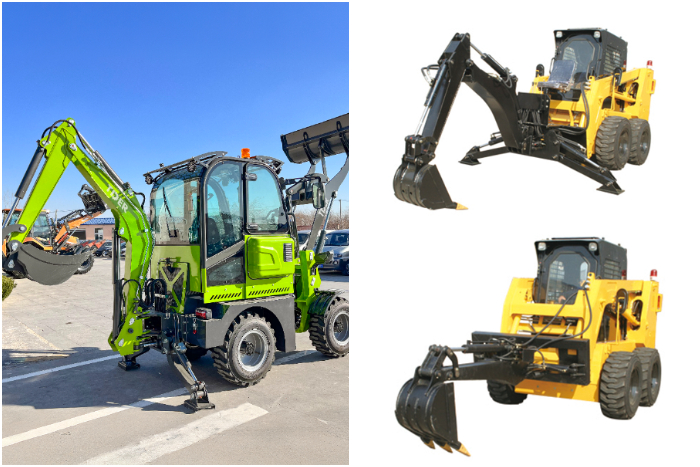
- Usted utiliza varios archivos adjuntos — Una minicargadora puede cambiar entre cucharones, horquillas, barredoras, barrenas, retroexcavadoras y otros implementos para diferentes tareas.
- La versatilidad es más importante que la excavación especializada. — Es muy adecuado para la carga, nivelación, limpieza, manipulación de materiales y otros trabajos multiusos.
- Es necesario adaptar la máquina a diferentes trabajos. — El accesorio adecuado puede ampliar sus capacidades sin necesidad de una máquina base diferente.
Una regla de decisión simple:
- Excavación y carga regulares → Retroexcavadora
- Trabajo compacto + múltiples implementos → Minicargadora
En definitiva, la mejor máquina es la que mejor se adapta a su carga de trabajo principal, las condiciones de la obra, los requisitos de excavación y las necesidades de accesorios.
5. Conclusión
La elección entre una retroexcavadora y una minicargadora depende, en última instancia, de si se necesita una máquina específica para excavación y carga o una máquina compacta con flexibilidad en los implementos. La TDER ZT15-20, por ejemplo, combina una pala cargadora frontal con una excavadora trasera integrada, mientras que la TDS65 puede ampliar sus capacidades mediante diferentes implementos.
Para los clientes que buscan una retroexcavadora, TDER ofrece una gama de modelos de uso común en construcción, servicios públicos, obras viales y otras aplicaciones. Para los clientes que prefieren la flexibilidad de las minicargadoras, TDER también puede proporcionar diferentes configuraciones de excavación.
Brazo de retroexcavadora: un brazo de excavación fijo, sencillo y ligero para excavaciones básicas.
Brazo giratorio de la retroexcavadora: similar en tamaño y función, pero con una capacidad de giro de aproximadamente 110° para una mayor flexibilidad de trabajo.
Accesorio retroexcavadora: un sistema de excavación más completo con asiento independiente y patas estabilizadoras, que proporciona mayor profundidad de excavación y rango de trabajo, pero con un peso de accesorio mayor.
Esto significa que no siempre es necesario elegir entre una retroexcavadora y una minicargadora como soluciones completamente independientes. La configuración TDER adecuada se puede adaptar a la profundidad de excavación, el espacio de trabajo, los requisitos de los accesorios y las necesidades generales del proyecto.
6. Preguntas frecuentes
¿Se puede equipar una minicargadora con un accesorio de retroexcavadora?
Sí. Una minicargadora puede equiparse con diferentes implementos de excavación, como un brazo retroexcavadora, un brazo retroexcavadora giratorio y una retroexcavadora completa. La opción adecuada depende de la profundidad de excavación requerida, el rango de trabajo y las condiciones del lugar de trabajo.
¿Cuál es la diferencia entre un brazo de retroexcavadora y un brazo de retroexcavadora giratorio?
El brazo de retroexcavadora es un accesorio fijo sencillo para excavaciones básicas. El brazo giratorio para retroexcavadora añade aproximadamente 110° de giro, lo que proporciona mayor flexibilidad al excavar junto a obstáculos o en zonas confinadas.
¿Qué accesorio para minicargadora es el mejor para excavaciones más profundas?
Un accesorio retroexcavadora completo suele ser la mejor opción cuando se requiere mayor profundidad de excavación y un mayor alcance de trabajo. Incluye un asiento independiente y patas estabilizadoras para trabajos de excavación más específicos.
¿Puede una minicargadora con accesorio retroexcavadora reemplazar a una retroexcavadora?
No siempre. Una minicargadora con retroexcavadora puede realizar muchas tareas de excavación, pero una retroexcavadora está diseñada específicamente para la excavación y carga integradas. La mejor opción depende de la frecuencia con la que necesite excavar, el espacio de trabajo y la frecuencia con la que necesite cambiar de implementos.
¿Qué es mejor para obras con espacio reducido: una retroexcavadora o una minicargadora?
Una minicargadora suele ser más adecuada para espacios reducidos debido a su diseño compacto y gran maniobrabilidad. Una retroexcavadora puede ser preferible cuando tanto la excavación como la carga son requisitos fundamentales.